
Thinking about a fresh start on Florida’s Space Coast? Brevard County blends Atlantic-ocean beaches, riverfront living, rocket-launch views, and friendly neighborhoods with real value for

Dated: October 15 2025
Views: 1356
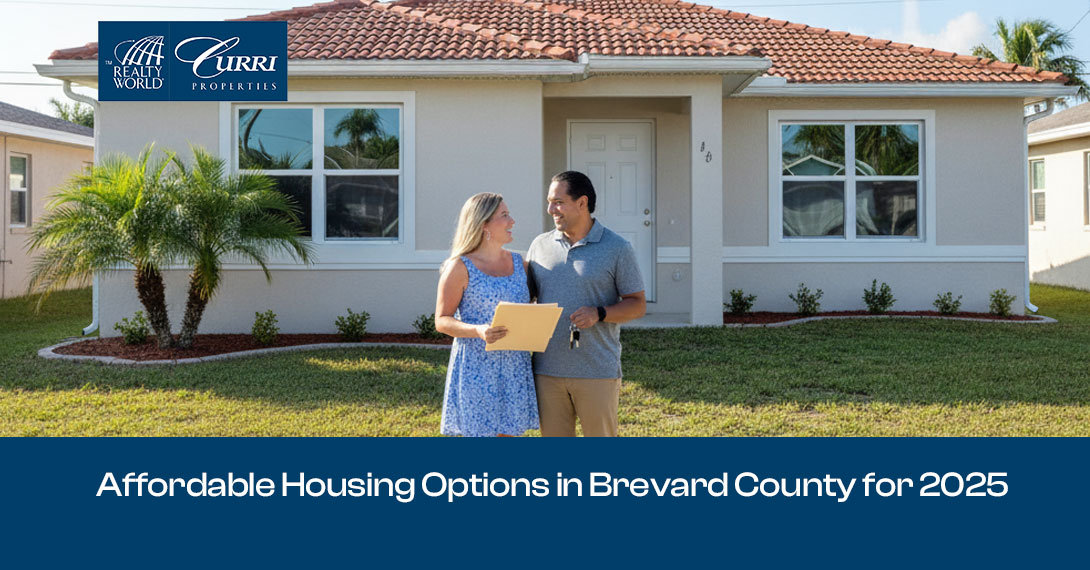
How cost-conscious buyers can find value on Florida’s Space Coast — and how Realty World Curri Properties can help you land it.
Florida’s Space Coast offers a rare mix of coastal lifestyle, expanding aerospace and tech employment, and day-to-day convenience along I-95 and US-1. In 2025, many buyers are still finding opportunities here that compare favorably to larger Florida metros. Condos and townhomes often list below single-family homes, some inland neighborhoods remain approachable for first-time buyers, and new-construction corridors continue to roll out incentives. For the right shopper with a realistic game plan, Brevard can deliver both value and quality of life.
This guide breaks down where to look, which programs can reduce your upfront costs, what property types stretch your budget, and how to structure a smart offer in today’s conditions—backed by on-the-ground experience from Realty World Curri Properties.
Affordability is personal. Your price comfort depends on income, cash on hand, debt profile, and the features you truly need. Still, several patterns hold for budget-minded buyers:
Condos and townhomes often deliver the lowest entry price. Just remember to include HOA or condo dues in your monthly total.
USDA-eligible pockets just inland from denser corridors can open the door to zero-down mortgages for qualified buyers and properties.
Down payment and closing-cost assistance at the state and county level can meaningfully reduce cash-to-close when paired with a lender who knows these programs well.
Key idea: Focus not only on sticker price but on total monthly cost—principal and interest, property taxes, insurance, HOA/condo dues, and typical utilities. A slightly higher purchase price with good wind-mitigation and lower insurance can be cheaper overall than the rock-bottom list price with expensive carrying costs.
Always confirm the latest guidelines with a participating lender and your agent. Program rules, income caps, and availability can change during the year.
A statewide program that helps eligible buyers with down payment and closing-cost assistance when using participating lenders. It supports common loan types (FHA, VA, USDA, and conventional), subject to income, credit, property, and occupancy rules.
Why it matters: If you’re “almost there” on cash or need help with interest-rate buydowns and fees, this program can be the difference between pausing and proceeding—especially when combined with seller credits.
Pro tip: Work with a lender who processes these files often. Proper sequencing of the assistance approval, appraisal timeline, and rate lock keeps your offer competitive.
Administered locally at the county or city level, SHIP channels funds for down payment help, closing costs, and sometimes repair assistance for eligible buyers. Each locality sets its own guidelines, priorities, and intake windows.
Why it matters: SHIP can “stack” with first-mortgage products and other aid, reducing cash required and expanding your pool of viable homes.
Pro tip: Because funding can be cyclical, ask your agent to coordinate with lenders early—some windows are first-come, first-served.
For eligible borrowers and properties in designated areas, USDA mortgages offer zero-down financing. Many pockets of Brevard just outside the highest-density corridors qualify.
Why it matters: Zero down preserves your cash for closing costs, a rate buydown, or early repairs. If you’re flexible on exact location, USDA can be the most powerful affordability lever.
Pro tip: Address-level eligibility matters. Have your agent and lender vet specific listings before you fall in love.
If you need time to build credit or savings, speak with local housing counselors and nonprofit partners. They can help with budgeting, credit coaching, and planning—so when the right listing appears, you’re ready to act.
Every buyer’s target map looks different. These general areas and property types often deliver good price-to-lifestyle value. Your Curri Properties agent will build a custom search with live inventory and comps.
Why it’s compelling: A broad range of price points, frequent new construction, and periodic builder incentives.
What to target: Modest 3-bed single-family homes west of the interstate, newer townhomes near daily-needs retail, and energy-efficient builds that offset insurance and utilities.
Why it’s compelling: Proximity to aerospace employers at approachable prices. Some nearby areas may meet USDA property eligibility.
What to target: Resale single-family homes with solid “bones,” well-kept townhomes close to services, and value-priced condos.
Why it’s compelling: Central access, commuter-friendly, and a mix of older and newer housing stock that can align with tighter budgets.
What to target: Homes with recent roofs and updated electrical/HVAC. Insurance tends to reward newer systems and wind-mitigation features.
Why it’s compelling: Condo/townhome segments typically price below single-family alternatives. Exterior maintenance handled by the association can tame surprises—so long as you read the budget and reserves.
What to target: Communities with recent roofing or completed structural milestone work where applicable, predictable dues, and healthy reserves.
Why it’s compelling: Amenitized living at accessible prices. Land-lease communities can lower purchase price; fee-simple 55+ neighborhoods can also be value-forward.
What to target: Updated tie-downs and wind-resistant features, newer roofs, and any improvements that earn insurance credits.
In Florida, insurance is central to affordability. Two comparable homes can carry very different premiums. Features that generally help:
Newer or recently replaced roofs (ask for permit dates and materials).
Roof-to-wall connections (clips or straps) and secondary water barriers.
Impact-rated windows/doors or approved storm shutters.
Elevation and flood considerations appropriate to the sub-market.
If you’re buying a solid but older home, consider a post-closing improvement plan to pursue wind-mitigation upgrades. Even modest changes—door bracing, gable end reinforcement, or adding qualifying shutters—can reduce risk and potentially win insurer credits.
Bottom line: Don’t let a low asking price blind you to elevated premiums. Ask your agent to get insurance ballparks on top contenders before you write an offer.
New construction can include incentives such as rate buydowns, closing-cost contributions, appliance packages, or move-in-ready “spec” homes. While base prices may exceed nearby resale comps, the net can still favor new construction once you apply incentives and account for energy efficiency and warranty coverage.
Resale homes may offer more room to negotiate, especially condos and townhomes in communities where supply is higher. Budget for any needed repairs or upgrades, and use inspection results to negotiate credits that lower your total out-of-pocket.
Pro tip: When comparing two finalists, run a full five-year cost forecast: principal and interest, taxes, insurance, dues, predicted utility usage, and expected maintenance. Choose the winner on total cost and livability, not just list price.
Stack assistance with seller credits
Combine a state or county assistance program with strategic seller concessions. Direct credits can fund a permanent rate buydown, a temporary 2-1 buydown, or closing costs your lender allows.
Target USDA-eligible addresses
If you qualify and the property is eligible, zero-down preserves cash for earnest money, inspections, and reserves. This can be decisive when competing for well-priced homes.
Model condos carefully
Low purchase price doesn’t always mean low monthly. Compare condos to slightly more expensive single-family homes that may carry lower insurance and no condo dues. Pick the cheapest all-in monthly, not just the cheapest list price.
Use wind-mitigation strategically
A home with newer roof, proper connections, and impact openings can carry lower premiums. If two homes are close on price and location, the better wind-mit house often wins the affordability race.
Week 1 — Get numbers and eligibility
Talk with a participating lender about statewide assistance and any local programs.
Ask for payment scenarios across FHA, conventional, VA, and USDA if applicable.
Gather paystubs, W-2s, bank statements, and a list of monthly debts for a fast pre-approval.
Week 2 — Define the target
Select two property types and two sub-markets so your search is focused but flexible (for example, “Palm Bay single-family under a set price” and “Rockledge/West Melbourne condos with dues below a set threshold”).
Decide on a ceiling price and a ceiling monthly payment—we will protect both.
If possible, move from simple pre-qualification to pre-underwriting for stronger offers.
Week 3 — Tour and compare
Tour 6–8 homes that match your filters to build price intuition.
Request insurance quotes or at least premium ballparks on top contenders.
Review HOA/condo budgets, reserves, and any upcoming assessments.
Week 4 — Offer and close
Write offers that prioritize net affordability: price + seller credit + rate strategy.
Time your inspections and financing milestones to keep the contract strong.
Prepare a short post-closing upgrade list focused on comfort, efficiency, and insurance credits.
Q: What price point defines an “entry-level” home this year?
A: County medians land in the mid-$300Ks, but there are notable exceptions. Many condos and townhomes trade under that level, and inland neighborhoods can present approachable single-family opportunities. Your actual budget will ride on your loan program, interest rate, insurance, and dues.
Q: Are condos still a good deal if dues rise?
A: Often—especially in well-managed communities with completed capital projects and predictable budgets. The math is property-specific. Compare total monthly costs against a slightly more expensive single-family home with a newer roof and lower insurance. Sometimes the condo wins, sometimes the house does.
Q: I’m a first-time buyer with limited cash. Where do I start?
A: Start with a lender conversation about state assistance, local programs, and USDA. From there, we’ll build a search that balances your payment comfort with sub-markets most likely to produce a good match.
Q: Insurance worries me. How do I control it?
A: Focus on wind-mit features and system ages. Favor newer roofs and impact protection when possible. If you buy a structurally sound older home, plan a few targeted improvements after closing—your insurer may recognize those upgrades.
Q: How competitive are offers that include assistance?
A: Very competitive when structured correctly. The key is documentation and timeline. We’ll present your file clearly, coordinate with your lender, and tailor concessions so sellers feel confident you’ll close on schedule.
Profile A: “Lowest cash to close”
Loan: USDA (if eligible) with minimum down.
Areas: North/west Titusville and select inland Palm Bay.
Strategy: Use seller credit for rate buydown; target homes with favorable wind-mit features to keep insurance in check.
Profile B: “Condo under a strict monthly cap”
Loan: Conventional or FHA paired with down-payment assistance if eligible.
Areas: Rockledge, West Melbourne, parts of Melbourne.
Strategy: Prioritize communities with updated roofs or completed structural milestones; compare dues head-to-head with expected insurance.
Profile C: “Starter single-family near employers”
Loan: FHA or conventional with assistance.
Areas: Palm Bay inland, Cocoa/Port St. John.
Strategy: Hunt for new or recent roofs, efficient HVACs, and simple floor plans that are easy to maintain and insure.
Local pricing intelligence
We track neighborhood-level comps, list-to-sale spreads, and new-construction incentives, so you don’t chase overpriced listings or overlook quiet bargains.
Program-savvy offers
Assistance programs add a few steps. We structure offers around lender timelines, appraisals, and credits to keep your contract clean and competitive.
Insurance-aware touring
We teach you what to look for—roof ages, wind-mit features, elevation considerations—so there are fewer surprises once you’ve fallen in love with a home.
Neighborhood fit
From Titusville’s gateway setting to Palm Bay’s new-build corridors and Rockledge’s condo pockets, we align commute times, HOA rules, and lifestyle with your budget.
Negotiation with purpose
Rather than fixate on price alone, we target net affordability—credits for rate buydowns, closing costs, or key repairs that actually lower your monthly and your move-in cash.
Condos/townhomes vs. single-family: Attached housing often offers a lower entry price, but dues vary widely. Healthy reserves and recently completed capital projects typically translate into fewer surprises.
Assistance availability: Funding windows open and close. Getting pre-approved early and lining up documentation saves you from missing the right house.
Inland value: The best bargain for your lifestyle might be 10–20 minutes from the beach. We’ll help you decide whether the commute tradeoff is worth the monthly savings.
Message Realty World Curri Properties with your budget, target monthly payment, and move-in timeline.
We’ll connect you with experienced lenders who handle state and local assistance programs regularly, then build a two-track search tailored to you—one path focusing on the lowest monthly payment options, and another on single-family value plays.
Within days, we’ll curate a tour list that fits your numbers, including potential USDA-eligible addresses where appropriate, and provide all-in monthly comparisons for your top picks.
On the Space Coast in 2025, affordability favors prepared buyers who combine the right neighborhood, the right program, and the right negotiation strategy. With Realty World Curri Properties as your partner, you can trade guesswork for a data-driven plan—and unlock a home that fits both your budget and your life.
Thinking about a fresh start on Florida’s Space Coast? Brevard County blends Atlantic-ocean beaches, riverfront living, rocket-launch views, and friendly neighborhoods with real value for
How cost-conscious buyers can find value on Florida’s Space Coast — and how Realty World Curri Properties can help you land it.Why Brevard County remains a smart buy in 2025Florida&rsquo
How Realty World Curri Properties guides buyers and sellers on Florida’s Space CoastIntroduction: Why “Local” Matters More Than EverReal estate has never been more data-driven;
Your local guide to buying along the Indian River Lagoon and the Atlantic Coast — from Cocoa Beach to Melbourne Beach and beyond.Buying a waterfront home in Brevard County isn’t just a
 Information is deemed to be reliable, but is not guaranteed. © 2026 MLS. Last Updated September 23, 2026 10:21 PM UTC The information on this sheet has been made available by the MLS and may not be the listing of the provider. Listing data provided by the Daytona Beach Area Association of REALTORS® Internet Data Exchange (IDX) program. Data is believed to be accurate but not warranted.
 These listings are provided by the IDX Program of Brevard County, Florida. Real Estate listings held by brokerage firms other than Realty World Curri Properties are marked with the IDX Logo and detailed information about them includes the name of the listing brokers. IDX information is provided exclusively for consumers' personal, non-commercial use, and may not be used for any purpose other than to identify prospective properties consumers may be interested in purchasing. Information Deemed Reliable
But Not Guaranteed.
Copyright 2026 Space Coast Association of REALTORS, Inc
Show More...
These listings are provided by the IDX Program of Brevard County, Florida. Real Estate listings held by brokerage firms other than Realty World Curri Properties are marked with the IDX Logo and detailed information about them includes the name of the listing brokers. IDX information is provided exclusively for consumers' personal, non-commercial use, and may not be used for any purpose other than to identify prospective properties consumers may be interested in purchasing. Information Deemed Reliable
But Not Guaranteed.
Copyright 2026 Space Coast Association of REALTORS, Inc
Show More...
